How to decorate a bedroom for visual harmony
When we consider how to decorate a bedroom, we often focus on individual items – a beautiful bedframe, a soft rug or a striking lamp. However, a successful bedroom design interior isn't built on isolated pieces, but on the relationship between them. This is the essence of visual harmony: the art of creating a space where every element feels as though it belongs.
Achieving this balance is the difference between a room that simply looks good and one that feels restorative. In this guide, our Hammonds experts explore how to master the principles of harmony to transform your bedroom into a grounded, intentional sanctuary.
What is visual harmony?
Visual harmony is a design philosophy grounded in the principle of repetition and rhythm. It's the invisible thread that ties a room together, ensuring that the eye can travel across the space without being jarred by visual noise or a lack of cohesion.
In the context of decorating ideas for bedrooms, harmony creates a sense of order and calm. By repeating specific design cues – be it a shape, a material or a finish – the space feels inherently intentional.
This predictability is comforting, coaxing the body into a state of repose. It's less about rigid perfection and more about creating a grounded foundation that allows your personality to shine through.
Be consistent with colour
One of the most effective ways to establish harmony through bedroom interior design is the disciplined use of a colour palette. While it can be tempting to experiment with multiple bold hues, a harmonious room relies on connection.
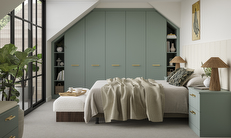
To master this look without it feeling flat, you should layer your chosen palette to create structure. A primary shade, often a grounded, calming base like sage or ivory, should act as the foundation of the room to establish an overall sense of peace. You can then build connection and character by playing with different saturations and finishes across your furniture and textiles.
For example, pairing a soft taupe on the walls with richer terracotta furnishings and muted stone woodwork creates depth, ensuring even contrasting elements feel part of the same story rather than isolated distractions.
Repeat key textures and patterns
While we crave diversity in our materials, repeating key textures is essential for visual harmony. Using a variety of materials without a common link can make a space feel frantic rather than curated over time.
Consider a material like rattan – by featuring it in a chair, then echoing it in a bedside lamp base or window blinds, you establish a rhythmic connection. The same applies to patterns. If you have a geometric print on a cushion, try repeating the same pattern in a different scale on a throw or on a piece of wall art.
These subtle echoes provide a sensory richness that feels exclusive and thoughtfully curated, giving your room a shared aesthetic language.
Use furniture for symmetry
Symmetry is a classic design tool for a reason: it provides an instant sense of order. In a bedroom, the bed serves as the natural visual anchor, and the furniture surrounding it should support this central feature.
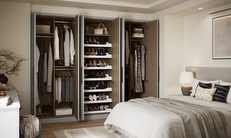
Mismatched furniture can sometimes make a room feel like a collection of objects rather than a unified space. In contrast, using pairs establishes a harmonious finish. Opting for bespoke matching bedroom furniture, such as stylish bedside tables or statement chests of drawers, creates a seamless visual flow that simultaneously maximises every millimetre of your home.
Synchronise your accessories
Even the smallest details can disturb the continuity of a space if they aren't synchronised. Accessories should be the finishing touch that reinforces your harmony, not pieces that scream for attention.
Apply the same principles of repetition to your finishing touches. If you have chosen aged brass for your wardrobe handles, ensure your bedside lamps and picture frames reflect that same metallic finish. You can also match patterns in different styles, such as a floral print on a vase that shares the same colourway as your curtains.
Foundational accessories, such as accent chairs or floor lamps, often work best in intentionally aligned pairs or zones. This level of intentionality transforms a bedroom from a place where you simply sleep into a deeply personal sanctuary.
Find your perfect balance with Hammonds
Visual harmony is the foundation upon which deep rest is built. Whether you're drawn to earthy, baked neutrals or the efficiency of a perfectly symmetrical layout, the goal is to remove the chaos of daily life.
If you're ready to explore how a bespoke layout and curated matching furniture can redefine your rest, book a free design visit today. Our experts can talk you through bespoke bedroom furniture design ideas and provide professional advice to help you establish total harmony in your home.